» » Pirana - Pirana / Pirana Il

Pirana - Pirana / Pirana Il flac mp3 download
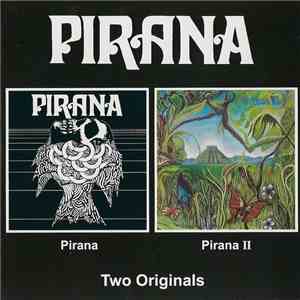
Pirana  - Pirana / Pirana Il flac mp3 download
Title:
Pirana / Pirana Il
Musician:
Style:
Prog Rock
Released:
Country:
MP3 album size:
1336 mb
FLAC album size:
1624 mb
Other formats:
VOC RA AUD MMF ASF FLAC VQF
Genre:
Rating:
4.5 ✪

Download links

Pirana - Pirana / Pirana Il
MP3 version RAR archive

1624 downloads at 17 mb/s

Pirana - Pirana / Pirana Il
FLAC version RAR archive

1336 downloads at 19 mb/s

Tracklist

Pirana
Elation 9:27
Sermonette 5:54
The Time Is Now 6:28
Find Yourself A New Girl 3:58
The River 4:32
Easy Ride 3:45
Stand Back 10:10
Pirana Il
Pir'ana 6:33
Then Came The Light 3:57
I've Seen Sad Days 6:11
Persuasive Percussion 0:55
I've Got To Learn To Love More Today 2:18
Jimbo's Blow 1:01
Thinking Of You 8:00
Here It Comes Again 2:52
Move To The Country 2:58

Versions

Category Artist Title (Format) Label Category Country Year
PL 576 Pirana Pirana / Pirana Il ‎(CD, Comp, RE, RM, Unofficial) Progressive Line PL 576 Australia 2002
PL 576 Pirana Pirana / Pirana Il ‎(CD, Comp, RE, RM, Unofficial) Progressive Line PL 576 Russia 2016

Video about Pirana - Pirana / Pirana Il


Reviews:
  • Silver Globol
Australian band PIRANA was formed in 1970, founded by Stan White (keyboards), Jim Duke-Yonge (drums), Tony Hamilton (vocals, guitar) and Graeme Thompson (bass) as a new musical venture for the latter three following their tenure in pop band Gus & The Nomads. Their first recording were as a backing band for a solo album by Greg Quill, but in 1971 they were signed by legendary record label Harvest and soon got busy making their debut album.Pirana hit the shops in 1971, and while the album didn't exactly set the world on fire the band quickly established themselves as a popular live act. This first effort of their owed more than a bit to Santana in overall style, and Pirana were at their best when performing one of his songs, Soul Sacrifice, on stage.Stan White left the band shortly after the release of their first album, replaced by Keith Greig. And with White out of the band guitarist Hamilton had a more prominent place as a songwriter for Pirana's second effort Pirana II, issued late in 1972. A direct result of that was that the band started moving slightly away from their latin-inspired sound. They never managed to hit the big time with this second effort either though, not even a superb performance at 1972's Sunbury festival gave the band a true commercial breakthrough. Indeed, the latter actually cemented their reputation as a Santana-influenced act, and while their credibility as a live unit soared their merits as a studio unit wasn't by far as heralded.Grieg left the band in 1972, and a flurry of line-up changes followed for the next couple of years, until Pirana fizzled out to disbandment in late 1974.
  • Blackbrand
Critics have pigeonholed Pirana as mere Santana clones, and while comparisions are understabdlble and the influence of Santana is obvious, this arguably did the group a considerable disservice. Its dynamic and rhythmic performance at the definitive Sunbury music festival in 1972 drew inevitable comparisons to the Latin-rock champions of Woodstock, due in no small measure to their superb performance of Santana's "Soul Sacrifice". But there was much more to Pirana than that facile categorisation allowsLet's acknowledge, then set aside for a moment, the band's obvious debt to Santana as their early musical template. Beyond that, we can hear examples of fine, melodic songwriting -- mainly from keyboardist Stan White on the first album, but consummately taken over by guitarist and vocalist Tony Hamilton on the second -- that displays a diversity of influences while still keeping the band's innate individuality. It's a bit like their contemporary peers, Sebastian Hardie or Sherbet, who also had a hard time living down copious (and mostly bogus) comparisons while they tried to forge an original path.For a start, Tony Hamilton's guitar was never less than wonderful. He sang commandingly, with soul, atop Jim Yonge's fluid drumming, supported by the anchorage of Graeme Thompson's throbbing bass. Keyboards were vital to the Pirana sound, and Stan White and his successor, Keith Greig, provided rich Hammond organ reinforcement for the overall feel of the band.In Pirana, members came and went, but it is essentially the core band comprising Duke-Yonge, Thompson, Hamilton and Greig (who replaced Stan White after the first LP), who made the records and sustained the bulk of the band's performing tenure, and must be most remembered as the definitive entity. Hamilton, Thompson and Yonge were all ex-members of Gus & The Nomads, a 60s R&B/pop band fronted by "the wild man of Sydney rock" Gus McNeil. Gus was executive producer on Pirana's debut album, and several others including the legendary A Product Of A Broken Reality for Company Caine, Greg Quill's early solo recordings (including the Fleetwood Plain). Gus also set up his own publishing company, Cellar Music, which (besides Pirana) also handled publishing for Mike Rudd, Greg Quill, Ross Wilson and Gulliver Smith.Pirana's first recordings were as the backing group for Greg Quill's 1970 solo album Fleetwood Plain. They signed to Harvest in 1971 and issued two singles. Here It Comes Again (May) was reputedly the first local single released in stereo, and can still be found on Raven's Golden Miles compilation CD; the same month they toured nationally as support band on the historic package tour by Deep Purple, Free and Manfred Mann's Chapter Three. Their second single was "I Hope You Don't Mind" (Nov.) Late in the year Stan White left to join pop band The Going Thing, and he was replaced by Keith Greig.In concert they were always regarded as a top-drawer act; they went down a storm at the inaugural Sunbury rock festival, and their live version of Santana's "Soul Sacrifice" earned them a track on the Sunbury '72 album. EMI issued their second LP Pirana II in November 1972, by which time Richard McEwan had replaced Hamilton on guitar. Andrew James replaced Greig in 1973 and Phil Hitchcock replaced Graeme Thompson on bass in 1974. The band continued to work on the dance and pub circuit, but they didn't record again, and they eventually broke up in late 1974.Duke-Yonge (aka Jimmy Tonge) went on to work with Corroborree, the Anne Kirkpatrick Band and Bullamakanka and in the late 1970s Keith Greig was a founding member of The Brucelanders, who went on to considerable acclaim in their later incarnation as The Reels (minus Keith).Original article by Paul Culnane (milesago.com)