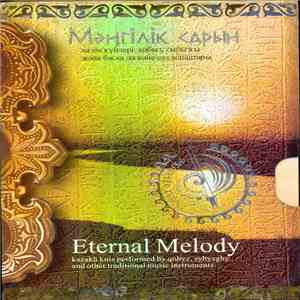
Various - Eternal Melody - Kazakh kuis performed by qobyz, sybyzghy and other traditional music instruments flac mp3 download
Title:
Eternal Melody - Kazakh kuis performed by qobyz, sybyzghy and other traditional music instruments
Musician:
MP3 album size:
1298 mb
FLAC album size:
1583 mb
Other formats:
MOD APE XM MPC DTS AU AA
Genre:
Rating:
4.3 ✪
Download links
- 1583 downloads at 17 mb/s
MP3 version RAR archive
Tracklist
| Eternal Melody - Qobys Kuis - CD 1 | ||
| 1-1 | –Zhappas Qalambai* | Qongyr |
| 1-2 | –Dawlet Myqtybai* | Qorgyt (1.Version) |
| 1-3 | –Musabek Zharqynbek* | Qorgyt (2.Version) |
| 1-4 | –Musabek Zharqynbek* | Qorqyt Saryny |
| 1-5 | –Musabek Zharqynbek* | Zhelmaya |
| 1-6 | –Shamshi Erenbek* | Zhelmaya |
| 1-7 | –Musabek Zharqynbek* | Ushardyng Uluuy |
| 1-8 | –Musabek Zharqynbek* | Auppai |
| 1-9 | –Musabek Zharqynbek* | Targhyl Tana |
| 1-10 | –Musabek Zharqynbek* | Bashpai |
| 1-11 | –Musabek Zharqynbek* | Elim-ai, Khalqym-ai |
| 1-12 | –Sayan Aqmolda* | Tolghau |
| 1-13 | –Qazbek Aben* | Saryn |
| 1-14 | –Qazbek Aben* | Qongyrzhai |
| 1-15 | –Qazbek Aben* | Aqqu |
| 1-16 | –Qazbek Aben* | Qoshtasu |
| 1-17 | –Qazbek Aben* | Torghai Tolghauy |
| 1-18 | –Qazbek Aben* | Sybyzghy |
| 1-19 | –Saghyntai Elepan* | Kozimbetting Sayny |
| 1-20 | –Saghyntai Elepan* | Saghyntaidyng Kuii |
| 1-21 | –Bazarkhan Qosbasar* | Saryn |
| 1-22 | –Alquat Qazaqbai* | Baqsy |
| Eternal Melody - Qobys Kuis - CD 2 | ||
| 2-1 | –Zhappas Qalambai* | Munglyq-Zarlyq |
| 2-2 | –Zhappas Qalambai* | Qongyr |
| 2-3 | –Zhappas Qalambai* | Qanshaiym |
| 2-4 | –Zhappas Qalambai* | Qasgyr |
| 2-5 | –Zhappas Qalambai* | Yqylas |
| 2-6 | –Zhappas Qalambai* | Qazan (2 Version) |
| 2-7 | –Zhappas Qalambai* | Zhez Kilik (1 Version) |
| 2-8 | –Zhappas Qalambai* | Zhez Kilik (2 Version) |
| 2-9 | –Zhappas Qalambai* | Marsh |
| 2-10 | –Saghyntai Elepan* | Kertolghau (1 Version) |
| 2-11 | –Dawlet Myqtybai* | Kertolghau (2 Version) |
| 2-12 | –Dawlet Myqtybai* | Erden |
| 2-13 | –Dawlet Myqtybai* | Zhalghyz Ayaq |
| 2-14 | –Dawlet Myqtybai* | Qazan (1 Version) |
| 2-15 | –Dawlet Myqtybai* | Airauyqtyng Ashy Kuii |
| 2-16 | –Dawlet Myqtybai* | Zholaushynyng Qongyr (1 Version) |
| 2-17 | –Dawlet Myqtybai* | Zholaushynyng Qongyr (2 Version) |
| 2-18 | –Dawlet Myqtybai* | Qambar Batyr |
| 2-19 | –Dawlet Myqtybai* | Shyngyrau |
| Eternal Melody - Qobys Kuis - CD 3 | ||
| 3-1 | –Dawlet Myqtybai* | Aqqu |
| 3-2 | –Smatai Umbetbai* | Erden |
| 3-3 | –Smatai Umbetbai* | Qambar Batyr |
| 3-4 | –Smatai Umbetbai* | Zhalghyz Ayaq |
| 3-5 | –Smatai Umbetbai* | Kertolghau |
| 3-6 | –Smatai Umbetbai* | Qongyr |
| 3-7 | –Smatai Umbetbai* | Toghyz Tarau |
| 3-8 | –Smatai Umbetbai* | Qazan |
| 3-9 | –Smatai Umbetbai* | Aqqu |
| 3-10 | –Smatai Umbetbai* | Zhez Kiik |
| 3-11 | –Sayan Aqmolda* | Airauyqtyng Ashy Kuii |
| 3-12 | –Sayan Aqmolda* | Shyngyrau |
| 3-13 | –Nurghazy Zhienkhanuly* | Arqa Saryny |
| 3-14 | –Nurghazy Zhienkhanuly* | Arghyn Ama |
| Eternal Melody - Sybyzghy Kuis - CD 4 | ||
| 4-1 | –Bolat Sarybai* | Uzbe |
| 4-2 | –Bolat Sarybai* | Nar Idirgen |
| 4-3 | –Bolat Sarybai* | Qongyr |
| 4-4 | –Bolat Sarybai* | Salawat |
| 4-5 | –Bolat Sarybai* | Qambar Batyr |
| 4-6 | –Shanaq Aughanbai* | Qylang Batyr |
| 4-7 | –Shanaq Aughanbai* | Balqurai |
| 4-8 | –Talghat Mughysh* | Sary Ala Qaz |
| 4-9 | –Talghat Mughysh* | Arbiyan Qongyr |
| 4-10 | –Talghat Mughysh* | Angshynyng Zary |
| 4-11 | –Talghat Mughysh* | Begim Ber |
| 4-12 | –Talghat Mughysh* | Sary Ozen |
| 4-13 | –Talghat Mughysh* | Kenges |
| 4-14 | –Talghat Mughysh* | Boz Inggen |
| 4-15 | –Talghat Mughysh* | Toqta Bayau |
| 4-16 | –Talghat Mughysh* | Qozy Korpeshting Qoshtasuy |
| 4-17 | –Talghat Mughysh* | Beibitshiik Quzy |
| 4-18 | –Talghat Mughysh* | Zharaly Aqboken |
| 4-19 | –Talghat Mughysh* | Sal Qula |
| Eternal Melody - Sybyzghy Kuis - CD 5 | ||
| 5-1 | –Kalek Qumaquai-uly* | Arman |
| 5-2 | –Kalek Qumaquai-uly* | Balzhyngger |
| 5-3 | –Kalek Qumaquai-uly* | Boken Zaarghaq |
| 5-4 | –Kalek Qumaquai-uly* | Beijinn Sary Atan |
| 5-5 | –Kalek Qumaquai-uly* | Boz Ingen |
| 5-6 | –Kalek Qumaquai-uly* | Zhorgha Ayu |
| 5-7 | –Kalek Qumaquai-uly* | Zhayau Deldal |
| 5-8 | –Kalek Qumaquai-uly* | Sary Ozen |
| 5-9 | –Kalek Qumaquai-uly* | Tepeng Kok |
| 5-10 | –Kalek Qumaquai-uly* | Keng Zhailau |
| 5-11 | –Beiilkhan Qaliaqpar-uly* | Aqqabanyng Tolqyny |
| 5-12 | –Beiilkhan Qaliaqpar-uly* | Angshyny Zary |
| 5-13 | –Beiilkhan Qaliaqpar-uly* | Aqsaq Auy |
| 5-14 | –Beiilkhan Qaliaqpar-uly* | Aqymzhannyng Qongyry |
| 5-15 | –Beiilkhan Qaliaqpar-uly* | Boghda Bultary |
| 5-16 | –Beiilkhan Qaliaqpar-uly* | Boz Inggen |
| 5-17 | –Beiilkhan Qaliaqpar-uly* | Bolenkhannyng Qongry |
| 5-18 | –Beiilkhan Qaliaqpar-uly* | Buqtyrma Ozeni |
| 5-19 | –Beiilkhan Qaliaqpar-uly* | Ertis Tolgyny |
| 5-20 | –Beiilkhan Qaliaqpar-uly* | Zher Koksegen Sary Atan |
| 5-21 | –Beiilkhan Qaliaqpar-uly* | Qara Ospan Biding Qara Qulag Atynyng Zhurisi |
| 5-22 | –Zhumakhan Shotpaq-uly* | Zhalghyz Zhigit |
| 5-23 | –Zhumakhan Shotpaq-uly* | Katiden Koshkendegi Tengizding Tolgyny |
| 5-24 | –Qusman Maqmyrza* | Maidajal |
| 5-25 | –Qusman Maqmyrza* | Adasqan Qaz |
| 5-26 | –Qusman Maqmyrza* | Zhelmaya |
| 5-27 | –Qusman Maqmyrza* | Qorqyttyng Qoyzy |
| 5-28 | –Qusman Maqmyrza* | Qorqyttyng Kuii |
| 5-29 | –Qusman Maqmyrza* | Qabanbai Batyrdyng Zhaugha Shapqandaghy Qubas Aty |
| Eternal Melody - Kuis performed by other age-old musical instruments - CD 6 | ||
| 6-1 | –Gulsara Pirzhan* | Qyz Mungy |
| 6-2 | –Talghat Sarybai* | Tolghau |
| 6-3 | –Talghat Mughysh* | Kerbez Qyz |
| 6-4 | –Gulzhan Nurghali* | Bulbul Torghai |
| 6-5 | –Nurgul Zhaqypbek* | Kokserke |
| 6-6 | –Nurgul Zhaqypbek* | Kokserke |
| 6-7 | –Nurgul Zhaqypbek* | Sur Borte |
| 6-8 | –Nurgul Zhaqypbek* | Zheldirme |
| 6-9 | –Nurgul Zhaqypbek* | Zhalghyz Kiik |
| 6-10 | –Ersaiyn Basyqara* | Qara Zhorgha |
| 6-11 | –Zamzagul Izmurat* | Asem Tolghau |
Credits
- Flute [Sybyzgy] – Beiilkhan Qaliaqpar-uly*, Bolat Sarybai*, Zhumakhan Shotpaq-uly*, Kalek Qumaquai-uly*, Talghat Mughysh*, Shanaq Aughanbai*, Qusman Maqmyrza*
- Gusli [Zhetigen] – Nurgul Zhaqypbek*
- Harp [Adyrna] – Gulzhan Nurghali*
- Jew's Harp [Shankobyz] – Gulsara Pirzhan*, Talghat Sarybai*
- Kobyz – Saghyntai Elepan*, Dawlet Myqtybai*, Zhappas Qalambai*, Musabek Zharqynbek*, Nurghazy Zhienkhanuly*, Sayan Aqmolda*, Saghyntai Elepan*, Smatai Umbetbai*, Shamshi Erenbek*, Qazbek Aben*, Alquat Qazaqbai*
- Performer [Saz syrnai] – Talghat Mughysh*
- Performer [Sherter] – Ersaiyn Basyqara*, Zamzagul Izmurat*
Notes
Kobyz(kylkobyz) Kobyz was sacred instrument. Ordinary people even were afraid to touch that instrument, because they believed, that kobyz like the owners of the instrument - baksis, had wonderful magic force and could influence ' the fate of man. According to the legends, kobyz and music of kobyz could banish evil spirits, illnesses and death. Kobyz - an antique two-stringed bow instrument. It is an ancient type of bow instrument, which was used by the peoples of Siberia, Central Asia, along the Volga, and in the Caucasus. Each people have their own name for bow instruments of this kind, but they resemble each other in structure, hair strings, tuning, and method of playing. The structure of the instrument itself speaks to its antiquity. The kobyz is made of one piece of juniper, maple, pine, or birch. The instrument consists of three parts: the head (bas), middle (basis-keude) and lower (ayak). The basis of the instrument is made as an open cup, stretched downwards. Its lower part is covered in leather (the sounding board). Strings for kobyz are still made of horsehair. The bow is arch-shaped and resembles an arrow bow: a bunch of horsehair is bound to both ends of a curved branch and fastened by a firm thread of camel wool. The performer embraces the bow from one side by his palm. This shaman’s instrument looked very unusual: the head was crowned by an eagle’s feather, hung by different metal plates as a kind of horny curls, figures of birds, which rang with the measure of music; on the bottom of the cup there was a mirror. Those were not only decorations, but also shaman’s symbols. The kobyz has an unusual rich and colourful timbre. The philosophical legend about Korkyt - the creator of this amazing instrument is connected with kobyz.---------------------------------
The Sybyzgy is the instrument most frequently mentioned in ethnographic literature of 18th-19th centuries. However, since the end of 19th century it is rarely met. It is easily made by perforating three or four finger holes in a cane 500-700 mm long. Since the 19th century sybyzgy is also made of metal. It is a favourite instrument of herdsmen and mostly used for playing songs and kyuis of lyrical character, which helped to preserve the most ancient mi: cal art, The playing technique is complex due to its primitive nature. However, it is this design that gives the quivering, 'natural' timbre and rich overtone sounds that makes playing the ancient bourdon duo phony possible. Blowing the three-holed instrument produces a scale of over two octaves.
----------------------------------
The shankobyz is a metallic, tongue-played instrument made of silver and other precious metals. To play it, it is held by the teeth and the mouth cavity serves as a resonator. Real polyphony is achieved owing to the easily achieved overtones and their distinctiveness. Its chamber sound is most suitable for the lyrical songs. The shankobyz is a favourite instrument for children and women alike.
Saz syrnai - an ocarina-type flute is made of fired clay. Uskirik and tastauyk ('tas' - tone, 'tauyk' - a bird in Kazakh) are similarly made. These arc children's instruments used to imitate the voices of birds and animals in addition to playing simple tunes. Improved types are very popular nowadays due to their fascinating mild timbre and used to provide a kind of colouring to the modern ensemble music.
The zhetygen earned its name from the seven strings pulled over the frame, which is an empty box about one meter (3 ') long. Two supports in the shape of knucklebone, asyk, are placed on each side under the strings and the instrument was tuned by varying the span between them.
It is played by plucking at the strings and simultaneously pressing it on the opposite side of the support. This variation in tension of the strings produces vibrations of the sound pitches (micro pitching) giving special characteristics to the sound. By the 20th century, not even one of the zhetygen was found with Kazakhs, but thanks to the recollection of old people it has been restored. Improved types of the zhetygen are nowadays used in traditional musical ensembles and orchestras.
The next instrument, sherter, combines features of the dombra - shape - and the kobyz -gouged frame, finger-board without frets, two or three horsehair strings and leather upper board. It is smaller than the dombra and according to legends, shepherds used played it to round up the sheep. The sound it produces is so pleasing to the ear that even birds alighted beside the player. It was played in accompaniment to songs and epics. Today, improved versions are widely used in ensembles and orchestras.
Related Various - Eternal Melody - Kazakh kuis performed by qobyz, sybyzghy and other traditional music instruments mp3 / flac albums:

Eternal vs DMC - The Mix download flac mp3
Hip hop / Funk & Soul
Eternal Featuring BeBe Winans - I Wanna Be The Only One download flac mp3
Electronic / Hip hop
Eternal Reign download flac mp3
Other albums
Kayapó-Xikrin - Ritual Music Of The Kayapó-Xikrin, Brazil download flac mp3
World, Folk & Country