» » The Beatles - Sessions

The Beatles - Sessions flac mp3 download
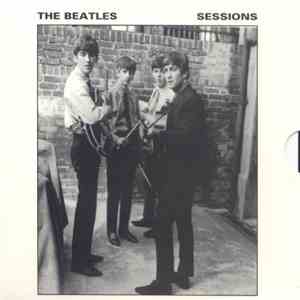
The Beatles - Sessions flac mp3 download
Title:
Sessions
Musician:
Style:
Beat, Novelty, Pop Rock
MP3 album size:
1123 mb
FLAC album size:
1753 mb
Other formats:
WMA MMF MOD AIFF VOX AHX TTA
Genre:
Rating:
4.8 ✪

Download links

The Beatles - Sessions
MP3 version RAR archive

1753 downloads at 17 mb/s

The Beatles - Sessions
FLAC version RAR archive

1123 downloads at 19 mb/s

Tracklist

1 Come And Get It
2 Leave My Kitten Alone
3 Not Guilty
4 I'm Looking Through You
5 What's The New, Mary Jane
6 How Do You Do It
7 Besame Mucho
8 One After 909
9 If You've Got Trouble
10 That Means A Lot
11 While My Guitar Gently Weeps
12 Mailman Blues
13 Christmas Time (Is Here Again)
14 Ob-La-Di, Ob-La-Da

Other versions

Category Artist Title (Format) Label Category Country Year
OC 064 2402701 The Beatles Sessions ‎(LP, Unofficial) Parlophone OC 064 2402701 1985
MC-077A/B The Beatles Sessions ‎(CD, Unofficial) Moonchild Records MC-077A/B Japan 2017
OC 064 2402701 The Beatles Sessions ‎(LP, Comp, Unofficial, Whi) Parlophone OC 064 2402701 Japan 1986
WPOCM-069 The Beatles Sessions ‎(CD, Unofficial) World Productions Of Compact Music WPOCM-069 Italy 1994
VT-180 The Beatles Another Sessions...Plus ‎(CDr, Comp, Unofficial) Vigotone VT-180 1999
Reviews:
  • Anayajurus
Between September 4, 1962 and May 8, 1970, the Beatles recorded and released over 200 different recordings through EMI Records. The fact that during that time, and the period 1962 through 1966 in particular, they were also busy giving live performances, making movies and TV appearances and satisfying the demands of the world's media, makes their recording output even more extraordinary.Even before the Beatles split up and stopped recording as a group in 1970, these was talk of unreleased tracks lying undiscovered in studio vaults. These stories, depending on your source, put the number of unissued titles anywhere between 50 and 250. The truth, however, is a vastly different story; only a handful of titles were recorded that, until now, have remained unreleased.The claims, from fans and media alike, that EMI was sitting on a veritable "gold mine" of unreleased material have steadily grown over the past 15 years fired by material continually appearing on bootlegs or being played on the radio.The most likely sources of this material are well known to Beatles fans and collectors:1) BBC RECORDINGS - Between March 1962 and June 1965 the Beatles recorded, in BBC Studios in Manchester and London, 36 songs for radio broadcast only. They were not recorded by EMI for commercial release. The Beatles also re-recorded many of their early hits and album tracks at the same time, but it is the original material that has stirred the public's interest.2) PUBLISHER'S DEMONSTRATION TRACKS - It has been widely and wrongly assumed that the Beatles recorded all the songs they composed for other artists. They did, however, as composers, demo some songs for their publishers. Based on the tracks that have been unearthed, these few demos consist purely of vocals with an acoustic guitar accompaniment and were probably recorded at home or in the publishers' demo studio.3) OTHER STUDIOS - Towards the end of their career as a group, the Beatles did record in other studios apart from Abbey Road; for example Trident, Apple and Twickenham Film Studios where much of the "Let It Be" material was recorded. It is therefore quite possible that some songs were recorded in a rough form but these were never delivered to EMI. However, it's the tracks that EMI do have, those that appear on this album, that are of most interest and we take up the story in 1976 when the Beatles' contract with EMI finally came to an end. At that time executives in the company sat down and listened to all the material that had not been released. In the main it existed in the form of rough mixes only and few were considered suitable for commercial release. One track, "Leave My Kitten Alone," was seriously considered for release as a single in 1980, but with the tragic death of John Lennon in December of that year, the idea was abandoned.At the beginning of 1982, with the 20th anniversary of the release of "Love Me Do," the Beatles' first single for EMI, fast approaching and in response to scores of letters from fans, it was decided to appoint one person to undertake the mammoth task of listening to every tape the Beatles had recorded for EMI and log any reference to material that was previously unknown.The task was undertaken by Abbey Road studio engineer John Barrett and, although no new tracks were found, John did discover many interesting alternate versions of previously released songs. In fact, when Abbey Road presented "The Beatles At Abbey Road" in the summer of 1983, much of the audio material had been discovered by John during his research. Tragically, John died in February 1984, but the fruits of his painstaking research remain.After appraising the original unreleased tracks once more, and listening to the alternate versions discovered by John Barrett, it was decided that all the titles recorded in anything but mono would benefit from being remixed. Geoff Emerick, who had worked with the Beatles and engineered many of their recordings, was approached and asked to listen to the multi-tracks and remix them in order to improve the overall sound quality.Geoff set to work in Air Studios in London and Montserrat, and when he finally presented a tape to EMI it was clear that the end product was an album that justified its release both historically and musically.